
Plain Risk
Plain Risk is an approach to understanding, describing, and managing risk.
It helps people describe what could happen, the harm or loss it could cause, and what they can do about it.
For anyone interested in understanding risks and the decisions made about them.
Read and explore
The framework
The approach
Purpose, method, and applications of Plain Risk.
Principles
Follow the principles of Plain Risk
Concepts
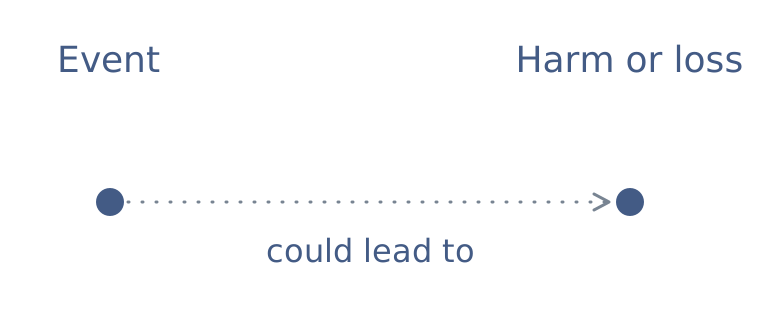
Use simple models to describe key elements and their relationships, with sentence patterns and diagrams that make their elements explicit.
Connections
Examine how key concepts work together.
The structure of risk
Use the core model to connect possible harm or loss with its causes and consequences.
Connecting with practice
Connect Plain Risk to professional frameworks and guidance.
Apply
Describe a risk
Connect possible harm or loss to the events, conditions, or changes that could lead to it and what could follow.
Assess a control
Assess a control’s design and effectiveness in relation to its effects, objective, and the possible harm or loss it is intended to prevent or limit.
Explain risk appetite
Relate an activity to possible harm or loss and state the willingness to face that possibility in particular circumstances.
Risk governance
Set out the responsibility, authority, accountability, and duty attached to a role or body.